Etsy print on demand can reduce the need to hold inventory, but it does not transfer the seller's creative or customer responsibilities to a production partner. The product must fit Etsy's current rules, the listing must describe what the buyer will receive, and the partner relationship must be disclosed where required.
Start with the work you actually designed
Etsy allows sellers to use production partners, including print-on-demand services, for items based on the seller's original design or a buyer's customization. Using a partner to sell an unchanged ready-made item is a different activity and can violate Etsy's reselling rules. The distinction belongs at the start of the workflow, not after a catalog has been uploaded.
Keep a simple creation record for each design family. Save the source file, creation date, editable layers, licensed elements, and any customer-personalization logic. This record supports consistent revisions and helps you answer questions about originality. It does not replace legal advice or Etsy's own review process.
Read Etsy's current explanation of production partners and its guidance on drop shipping and reselling before deciding that a product is eligible.
Disclose the production relationship accurately
A production partner physically makes or applies the seller's design. Etsy requires sellers using production assistance to share the relevant information on applicable listings. The disclosure should reflect the real relationship. Do not describe a partner as a material supplier if it prints, engraves, sews, or otherwise produces the finished item.
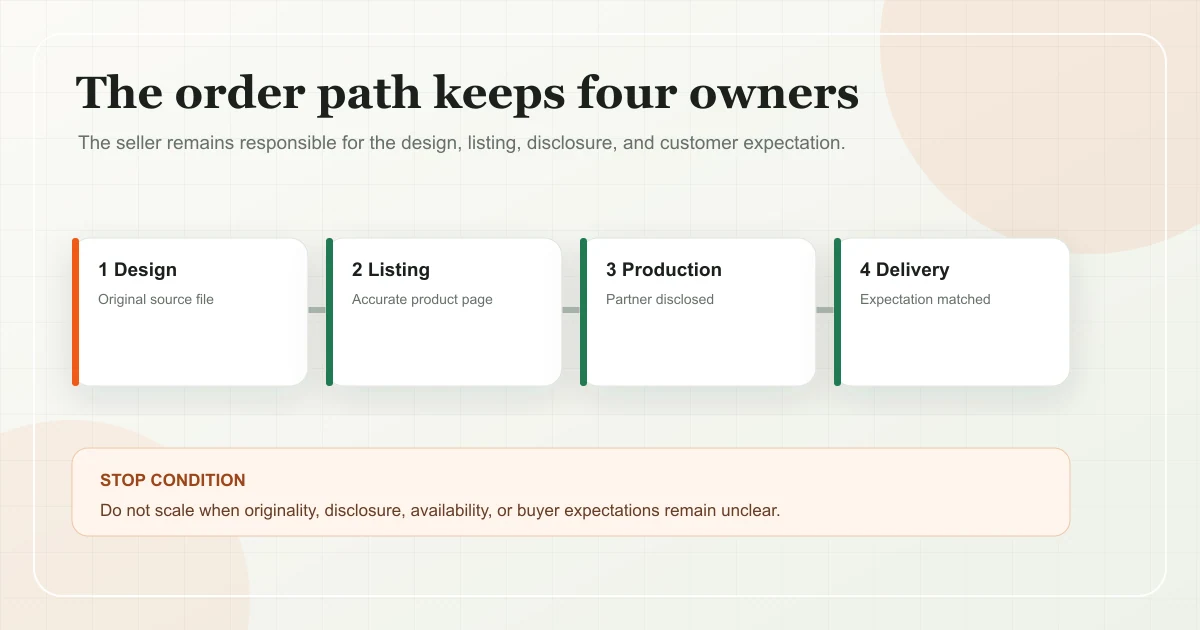
Before publishing, confirm who designs the item, who produces it, where it ships from, and what processing estimate the buyer sees. If any answer changes, update the listing rather than relying on a generic shop description.
Build the listing around the delivered product
A useful page explains the physical result, not only the artwork. A buyer may need dimensions, material, color expectations, personalization instructions, production timing, and care information. Use accurate mockups and avoid implying that a digital preview is the exact color or scale of every physical variation.
| Listing decision | Question to answer before publishing |
|---|---|
| Product choice | Does this format make the design readable and useful? |
| Variants | Are sizes, colors, and materials currently available and correctly described? |
| Production | Is the partner relationship disclosed on the applicable listing? |
| Delivery | Are processing and delivery statements supported by the current setup? |
| Returns and support | Can the shop explain what happens when an item arrives damaged or incorrect? |
The existing guide to comparing four Etsy product ideas can help narrow the first format. Once the format is fixed, use the marketplace tag generator to organize accurate product, recipient, occasion, and style language.
Test one Etsy print-on-demand product before expanding the catalog
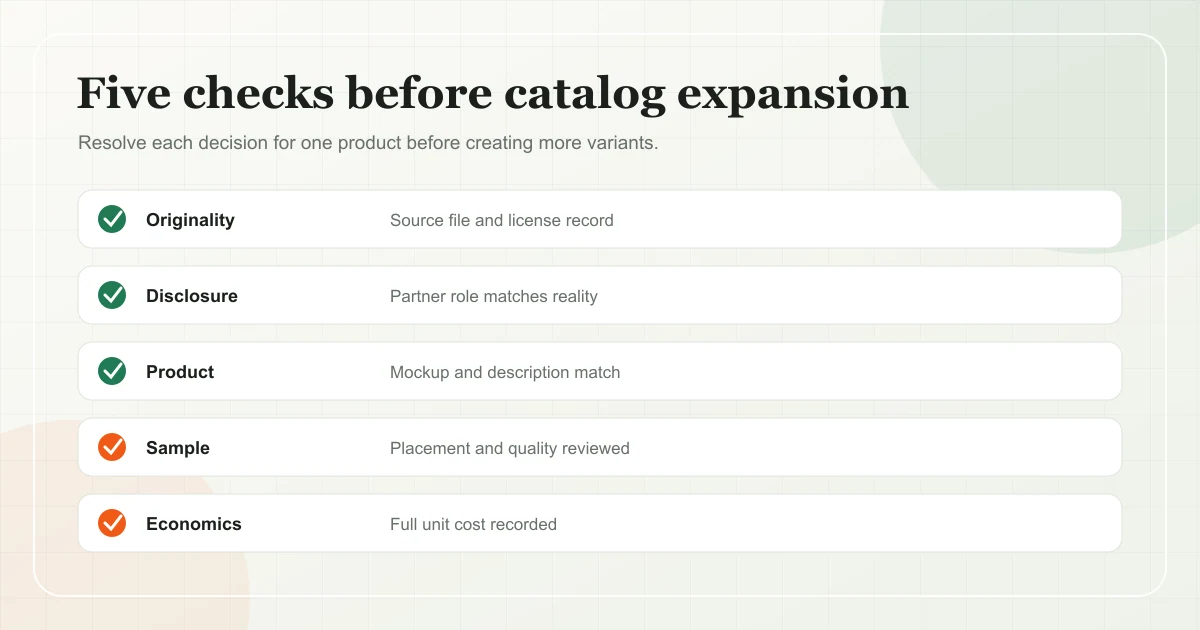
A large catalog can multiply untested assumptions. Start with one design on one or two suitable products. Order a sample when practical, inspect print placement and readability, and compare the delivered item with the listing. Record the real base cost, shipping, marketplace fees, replacement allowance, and target margin in the POD profit calculator.
Choose a review date and one success condition. That condition might be a minimum number of relevant visits, a completed sample review, or evidence that shoppers understand the personalization step. It should not be a promise of sales. If the product fails the review, change one variable or stop the test instead of copying it across more products.
Etsy print-on-demand questions
Is print on demand allowed on Etsy?
Etsy says production partners, including print-on-demand services, may be used for items based on a seller's original design or a buyer's customization. Sellers remain responsible for following the current Creativity Standards and disclosure requirements.
Do I need to name a production partner?
Etsy requires production assistance to be disclosed on applicable listings. Follow the current listing editor and official help guidance for the information buyers can see.
Should I publish the same design on every product?
No. Check whether the composition, size, use, and buyer expectation fit each product. A design that works on a poster may not remain readable on a small accessory.